Telegram crossed 900 million active users in 2024, and the platform shows no sign of slowing down. For marketers, community operators, and businesses running multi-account strategies, that growth has created a parallel economy: a busy, largely unregulated secondary market where established Telegram accounts change hands every day. The appeal is straightforward - an aged, active account carries built-in credibility, avoids the cold-start limitations of a brand-new profile, and can be deployed immediately for outreach, channel management, or audience building.
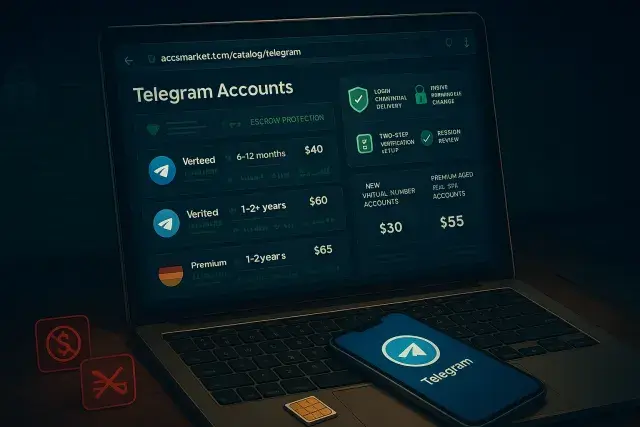
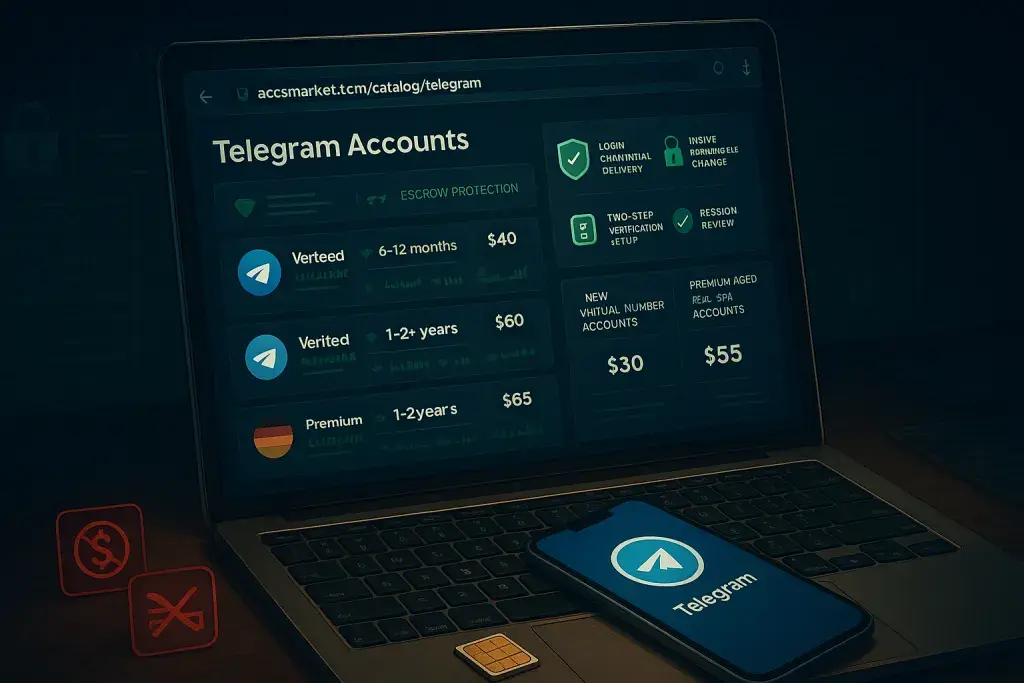
The difficulty is that this market is not uniform. It spans reputable catalog-based platforms, informal peer-to-peer forums, and outright scam operations that look indistinguishable from legitimate sellers at first glance. Buyers who skip the research phase often pay for accounts they cannot access, accounts that disappear within days, or accounts that bear no resemblance to what was advertised. If you are comparing the best places to buy telegram accounts 2026, structured marketplaces such as https://accsmarket.com/en/catalog/telegram offer a meaningful starting point because they apply standardized listing requirements and seller accountability that informal channels simply do not.
This article covers the full process: how the market is structured, what verified accounts actually are, how to evaluate sellers, how to complete a transaction without exposing yourself to fraud, and what to do the moment an account lands in your hands. Every stage matters, and every stage has specific risks that are entirely avoidable with the right knowledge.
Understanding the Telegram Account Marketplace Ecosystem
The secondary market for Telegram accounts is not a single place - it is a collection of overlapping channels with very different levels of structure, accountability, and buyer protection. Walking into it without a map is the primary reason buyers end up with unusable accounts or empty wallets. Understanding how the ecosystem is organized is the first step toward making a purchase you will not regret.
What Types of Telegram Account Trading Platforms Exist
Telegram account trading platforms fall into five broad categories, each operating on a different trust model. Dedicated account marketplaces are purpose-built platforms that list accounts as products, apply seller verification standards, and typically offer escrow or platform-mediated dispute resolution. These are the most structured option available and carry the highest baseline level of buyer protection.
General digital goods exchanges are broader platforms that sell a wide range of digital products - software licenses, social media accounts, virtual goods - with Telegram accounts as one subcategory. They vary considerably in quality control, but established platforms in this category often have mature review systems and payment protection mechanisms.
Peer-to-peer trading forums operate through community trust rather than platform enforcement. Sellers build reputation through post history and completed deal counts, but there is no escrow by default, and disputes often go unresolved. Social media reseller groups - typically operating through Telegram channels or messaging threads - are the loosest arrangement of all, with no structure beyond the seller's word. Finally, automated bot-based storefronts exist entirely within Telegram itself, delivering accounts via bot after payment. These can be legitimate, but they offer zero human recourse if something goes wrong.
| Platform Type | Trust Level | Buyer Protection | Price Range | Account Verification | Transaction Speed |
|---|---|---|---|---|---|
| Dedicated account marketplace | High | Escrow, dispute system | Moderate to high | Seller-verified listings | Fast to moderate |
| General digital goods exchange | Moderate to high | Platform-dependent | Low to moderate | Varies by platform | Fast |
| Peer-to-peer forum | Moderate | Minimal, community-based | Low | Seller-declared only | Variable |
| Social media reseller group | Low | None | Very low | Unverified | Fast if legitimate |
| Automated bot storefront | Low to moderate | None to minimal | Low to moderate | Automated, unconfirmed | Instant |
Why Demand for Verified Telegram Accounts Has Grown
Several converging forces have driven the demand for established Telegram accounts. Crypto and Web3 projects rely heavily on Telegram communities as their primary communication channel, creating immediate need for accounts that can operate as admins, moderators, or community members without triggering new-account restrictions. Affiliate marketers and e-commerce operators use aged accounts to run outreach campaigns that would be blocked or rate-limited on fresh profiles. Brand managers building presence across multiple markets often need accounts registered in specific regions.
The core reason aged accounts command a premium is behavioral - Telegram's anti-spam systems treat new accounts with inherent suspicion. An account with months or years of activity behind it can send messages, join groups, and interact with users in ways that a freshly registered profile cannot. This creates a genuine functional difference between a new account and an established one, not just a perceived one, which justifies the secondary market's existence and drives buyers toward verified Telegram accounts for sale rather than creating accounts from scratch.
What Makes a Telegram Account "Verified" and Why It Matters
The word "verified" carries significant weight in marketplace listings, but it is used inconsistently across the industry. Buyers who assume all uses of the term mean the same thing regularly end up disappointed. Understanding exactly what sellers and platforms mean when they describe an account as verified is not a minor technical detail - it directly affects whether the account will serve your purpose and how long it will remain usable.
Phone Verification, Age, and Activity History
Three factors define the practical quality of any Telegram account on the secondary market: the method used to register it, how old it is, and what it has done since creation.
Phone verification refers to whether the account was registered using a real SIM card or a virtual number service. Accounts registered with physical SIM cards from real mobile carriers are significantly more stable. They are less likely to be flagged as suspicious, less likely to require re-verification after transfer, and generally more trusted by Telegram's systems. Virtual number accounts are cheaper to produce in bulk, which is why they are prevalent among low-cost sellers - but they carry a meaningfully higher risk of post-transfer instability.
Account age is measured from the registration date and directly affects what the account can do without triggering restrictions. Accounts under 30 days old behave like new accounts regardless of their activity. Accounts aged six months or more have established behavioral patterns that Telegram's systems recognize. Accounts over one year old represent a premium tier - they have demonstrated sustained existence and are the safest option for any use case involving active communication or community management.
Activity history covers the account's track record: groups joined, messages sent, profile completeness, and whether the account has ever been restricted. An account that has been dormant since registration carries less value than one with genuine organic use, even if both are the same age. Regional origin matters too - an account registered in a specific country may behave differently within region-locked groups or channels.
- Real SIM-registered accounts vs. virtual number accounts - stability and flagging risk differ significantly
- Account age tiers: under 30 days, 1-6 months, 6-12 months, 1-2 years, 2+ years
- Activity signals: group memberships, message volume, profile photo and bio, prior restrictions
- Country of registration and its relevance to target audience or platform geography
What "Verified" Does Not Mean in the Secondary Market
Telegram's official verification badge - the blue checkmark visible on public channels and profiles of notable organizations - is assigned by Telegram directly and cannot be purchased, transferred, or replicated through any third-party transaction. No secondary market seller can provide this badge. Any listing that implies otherwise is either misleading or fraudulent.
In the context of account marketplaces, "verified" has three distinct meanings that buyers must distinguish clearly:
- Official Telegram Verification: The blue badge granted by Telegram to public figures and organizations. Not transferable. Not available for purchase on any marketplace.
- Marketplace Seller Verification: The seller's claim, sometimes backed by platform review systems, that the account meets described specifications - age, phone registration type, activity level.
- Phone-Verified Account Registration: The account was originally created using a real phone number, making it more stable and less likely to be flagged than accounts created through virtual number services.
When sellers advertise verified Telegram accounts for sale, they almost always mean the third definition - phone-verified registration - sometimes combined with platform-level seller accountability. Assuming the first definition leads to wasted money and misaligned expectations. Ask any seller directly what their use of "verified" refers to before committing to a purchase.
How to Evaluate Sellers and Listings Before You Buy Telegram Accounts Safely
Even on reputable Telegram account marketplaces, not every listing deserves your trust. The difference between a smooth transaction and a frustrating loss often comes down to how carefully you evaluate the seller before you pay. This process takes ten minutes and regularly saves buyers from problems that take days to resolve - if they can be resolved at all.
Key Trust Signals on Reputable Telegram Account Marketplaces
The most reliable trust signal on any marketplace is transaction volume combined with review quality. A seller with hundreds of completed transactions and consistent positive reviews has a track record that is genuinely difficult to fake. Pay attention not just to the star rating but to the content of reviews - specific comments about account quality and accurate descriptions carry more weight than generic positive feedback.
Listing transparency is equally important. A trustworthy listing specifies the account's registration date range, the country of the phone number used, the type of verification, and any relevant activity details. Listings that omit these specifics are asking you to trust the seller blindly, which is a reasonable position to decline. Reputable sellers have nothing to hide and know that detailed listings attract more buyers.
Platform-provided escrow is the structural protection that separates serious marketplaces from informal arrangements. When a platform holds payment until the buyer confirms access, the seller has no incentive to disappear after delivering a non-functional account. A replacement or refund policy stated clearly in the listing - not just implied - is another strong indicator of seller confidence in their product.
- Seller rating combined with the total number of completed reviews, not just the score
- Completed transaction count - higher volume with consistent ratings indicates reliability
- Listing specificity: age, registration country, phone type, activity level all stated clearly
- Explicit replacement or refund guarantee for failed access post-delivery
- Availability of escrow or platform-mediated payment - not just PayPal or direct transfer
- Responsive and professional communication when asked pre-purchase questions
Red Flags That Indicate a Risky Seller or Listing
Some warning signs are obvious in retrospect but easy to miss when you are in a hurry or focused on price. The most dangerous red flag is a price that sits far below comparable listings with no stated reason. Accounts are priced based on age, verification quality, and activity - if a seller is offering the same specifications at half the market rate, the specifications are almost certainly not what they claim.
Sellers who insist on conducting the transaction outside the platform - requesting payment through personal transfer apps, cryptocurrency sent directly to a wallet, or any channel that bypasses the marketplace's payment system - are removing your only structural recourse. Legitimate sellers on reputable platforms have no reason to avoid the platform's payment system.
| Red Flag | What It Likely Indicates |
|---|---|
| Price significantly below comparable listings | Account quality does not match the described specifications |
| Zero or very few completed reviews | Unproven seller with no verifiable track record |
| Vague listing with no age, region, or verification details | Seller is hiding account quality issues |
| Pressure to pay outside the platform | Attempt to remove buyer protections before fraud |
| No stated replacement or refund policy | Seller does not expect to stand behind the product |
| Urgency tactics or time-limited pricing pressure | Manipulation designed to bypass your evaluation process |
Step-by-Step Guide: How to Purchase Telegram Accounts Through a Trusted Marketplace
Knowing what to look for is only useful when paired with knowing what to do. The purchasing process has several stages, and each one carries a distinct risk if skipped or handled carelessly. The steps below reflect how a careful, experienced buyer approaches this process - not with excessive caution, but with deliberate attention at every point where problems typically arise.
Preparing Before You Buy: What to Define First
Before you open any marketplace or browse any listing, clarify your requirements internally. Buyers who start browsing without defined criteria tend to get distracted by low prices or compelling descriptions and end up with accounts that do not fit their actual use case.
Define your intended use first. Community management requires different account characteristics than outreach campaigns, and both differ from multi-account operations where consistency across a batch matters more than any individual account's age. Once you know the use, you can identify the minimum acceptable account age, whether regional origin matters, how many accounts you need, and what your per-account budget realistically is.
- Intended use case: community admin, direct outreach, channel management, bulk operation
- Minimum account age required for your use case
- Preferred phone verification type: real SIM strongly preferred for active use
- Target region or language if your audience or channel is geography-specific
- Quantity: single account or bulk purchase, and whether consistency across a batch matters
- Maximum acceptable budget per account and in total
Navigating a Marketplace and Selecting the Right Listing
With your requirements defined, use marketplace filters to narrow listings by age range, region, and verification type. Do not skip this step and browse manually - filtering significantly reduces the time you spend evaluating listings that cannot meet your needs.
When you find a listing that fits your criteria on paper, read it fully rather than skimming for price. Check whether the account age is stated as exact or approximate, whether the phone verification type is explicitly mentioned, and whether any history of restrictions is disclosed. Cross-reference the listing details against the seller's review history - if reviews mention accounts not matching descriptions, that pattern will appear in the feedback.
If any detail in the listing is unclear, contact the seller through the platform's messaging system before purchasing. A seller who answers questions specifically and promptly is demonstrating accountability. One who gives vague or evasive answers in pre-sale communication will not improve after payment.
Completing the Transaction Safely
Once you have selected a listing and confirmed it meets your requirements, execute the transaction through the platform's own payment system. Never agree to an alternative payment method, regardless of how it is framed. Escrow protection only exists when payment flows through the platform.
- Select the listing and initiate the purchase through the platform's standard checkout process
- Confirm all account specifications match your requirements before payment
- Use the platform's escrow or buyer-protected payment - decline any request to pay outside the system
- Receive the login credentials delivered by the seller through the platform
- Immediately attempt to log in and verify that you have full account access
- Change the account password and update any linked recovery options before doing anything else
- Confirm the transaction as complete on the platform only after you have verified access and control
- Save all transaction records, account delivery details, and communication logs for potential future disputes
Securing the Account After Purchase
Account loss after purchase is one of the most common complaints in this market, and the majority of cases are preventable. The first 48 hours after receiving a Telegram account are the most critical period for establishing your control and avoiding behaviors that could trigger automatic restrictions.
Change the account password immediately - before you do anything else with the account. Then enable two-step verification through Telegram's settings and link it to an email address you control. Review active login sessions and terminate any that you did not initiate. If the original phone number is still linked, assess whether that creates a recovery vulnerability and address it through the seller if the platform's policy supports that discussion.
During the first several days, avoid sending bulk messages, adding a large number of contacts, or joining many groups in rapid succession. Telegram's systems flag sudden behavioral spikes, particularly on accounts that have recently changed ownership - even if the underlying account is legitimate and aged. Gradual, natural-looking activity in the first week gives the account time to stabilize under your ownership.
- Change the account password immediately upon receiving credentials
- Enable two-step verification linked to an email address you fully control
- Review all active sessions and terminate any not initiated by you
- Avoid mass-messaging, bulk group joins, or high-frequency actions in the first 48 hours
- Warm up the account gradually: normal interaction patterns before scaling any outreach activity
- Store transaction documentation in case warranty or dispute procedures need to be initiated
Pricing, Account Types, and What to Realistically Expect
Unrealistic price expectations drive more bad purchases than any other single factor in this market. Buyers who treat account purchasing as a commodity buy on price and consistently receive accounts that match their budget rather than their requirements. Understanding the logic behind pricing makes it easier to find genuine value without falling for low-cost traps.
Factors That Determine Account Pricing
Account pricing reflects a combination of scarcity, quality, and utility. Older accounts are more expensive because they are harder to produce at scale - you cannot manufacture two years of account history quickly. Real SIM-registered accounts cost more than virtual number accounts because the underlying registration is more stable and less likely to require re-verification. Accounts with genuine activity history carry a premium because that history is what makes them functionally useful for active deployment.
Regional origin also affects price when demand for specific geographies is high. An account registered in a high-demand region for a particular industry may cost more than an identical account from a lower-demand region, purely because of market dynamics. Bulk orders sometimes carry per-unit discounts, but buyers should confirm that quality standards apply consistently across the batch rather than accepting a lower average quality in exchange for volume pricing.
| Account Type | Typical Price Range | Key Features | Best Use Case | Risk Level |
|---|---|---|---|---|
| New account (under 30 days, virtual number) | Very low | Minimal age, no activity history | Testing only, not active deployment | High |
| Mid-age account (1-6 months, real SIM) | Low to moderate | Established registration, limited history | Light outreach, secondary profiles | Moderate |
| Aged account (6-12 months, real SIM, active) | Moderate | Behavioral track record, reduced restriction risk | Outreach campaigns, community roles | Low to moderate |
| Premium account (1-2+ years, real SIM, active) | Moderate to high | Full behavioral maturity, high platform trust | Admin roles, trust-sensitive operations | Low |
Bulk Purchasing vs. Single Account Acquisition
Bulk purchasing introduces a different set of risk calculations than buying a single account. The per-unit price typically drops with volume, which is appealing - but quality consistency across a batch is harder to guarantee, and sellers who can supply large quantities quickly are sometimes sourcing from lower-quality pipelines to meet demand.
Operating many accounts simultaneously also increases your exposure to Telegram's anti-abuse detection. Multiple accounts showing similar behavioral patterns from the same network environment are more likely to attract automated review than a single account operating independently. If bulk purchasing is your strategy, spread account activation across time, vary operational patterns, and confirm with the seller that each account in the batch was registered separately and meets the same specifications as a single-unit purchase would.
Single account acquisition, by contrast, allows for thorough pre-purchase evaluation and focused post-purchase care. For buyers who need one reliable account for a specific purpose, the single-unit route almost always produces better outcomes than bulk buying at a lower per-unit price.
Legal, Ethical, and Platform Policy Considerations
Buying and selling established accounts exists in a gray area that is worth understanding clearly before you proceed. This is not a reason to avoid the market entirely, but it is a reason to approach it with your eyes open and your expectations calibrated.
Telegram's terms of service do not explicitly provide a framework for account transfers between users. This means that buying an account is technically operating outside the intended scope of the platform's user agreement, which could theoretically result in the account being restricted if Telegram identifies the transfer. In practice, Telegram does not actively scan for account sales, and the secondary market operates openly - but the platform-level risk remains real and worth acknowledging.
The legal dimension is generally lower in risk for most buyers. Purchasing a digital account in most jurisdictions does not constitute an illegal act in itself. However, how that account is subsequently used matters. Using purchased accounts to send spam, conduct fraud, impersonate others, or engage in any activity that violates local law creates legal exposure independent of the purchase itself.
- Telegram's terms do not explicitly permit account transfers - buyers accept platform-level risk
- Legal risk from the purchase itself is generally low in most jurisdictions for standard business use
- Legal risk from how the account is used is entirely separate and depends on activity, not purchase
- Buyers in heavily regulated industries - finance, healthcare, legal services - should assess sector-specific compliance before using purchased accounts for client-facing communication
- Reputable marketplaces apply seller accountability standards that reduce the risk of buying accounts with problematic histories
Important: No marketplace, regardless of its reputation, can guarantee that a purchased account will never be restricted by Telegram. Platform policies are enforced algorithmically and can change without notice. Buying through structured, accountable platforms reduces risk at the transaction level but does not transfer that risk to the marketplace once the account is in your hands.
Comparing the Top Types of Platforms for Buying Telegram Accounts
If the earlier sections have clarified what to look for in an account and a seller, this section addresses the remaining decision: where to actually make the purchase. Not every buyer needs the same type of platform, and the right choice depends on how much protection you need, how quickly you need to transact, and what level of due diligence you are willing to do independently.
Dedicated Telegram account marketplaces are the strongest option for buyers who prioritize structured protection over the lowest possible price. These platforms apply listing standards, maintain seller review systems, and typically offer escrow. The trade-off is that they may have a smaller selection than broader digital goods exchanges, and prices tend to reflect the platform's accountability overhead.
General digital goods exchanges offer wider selection and sometimes lower prices, but quality control is less consistent. Buyer protection mechanisms vary by platform and sometimes require active initiation - disputes are not always resolved automatically, and buyers who do not read the platform's policy before purchasing may find themselves without recourse when they need it.
Peer-to-peer forums can yield good deals from experienced, community-trusted sellers, but they require significantly more independent due diligence. There is no structural protection - trust is earned through reputation, and reputation can be faked with enough effort. These platforms are better suited to buyers with prior experience in this market than to first-time purchasers.
| Platform Type | Best For | Buyer Protection | Verification Standards | Price Range | Delivery Speed |
|---|---|---|---|---|---|
| Dedicated account marketplace | First-time buyers, high-value purchases | Strong - escrow and dispute system | Platform-enforced listing standards | Moderate to high | Fast to moderate |
| General digital goods exchange | Buyers wanting broad selection | Moderate - platform-dependent | Seller-declared, partially reviewed | Low to moderate | Fast |
| Peer-to-peer forum | Experienced buyers with research capacity | Minimal - community reputation only | No platform enforcement | Low | Variable |
| Social media reseller group | Not recommended for most buyers | None | None | Very low | Fast if legitimate |
| Automated bot storefront | Experienced buyers needing fast delivery | None to minimal | Automated, unconfirmed | Low to moderate | Instant |
For most buyers - particularly those making their first purchase or handling accounts that will play a significant operational role - dedicated Telegram account marketplaces and established digital goods exchanges offer the best balance of selection, protection, and accountability. The small premium over informal channels is almost always worth the reduction in risk.
Questions and Answers
If I buy an account and it gets banned within a week, what are my options?
Your options depend entirely on where you purchased the account. Reputable marketplaces typically offer a replacement or refund window - usually 24 to 72 hours after delivery - provided you can demonstrate that the ban was not caused by your own actions after transfer. Document access immediately upon receipt, avoid behaviors that trigger Telegram's spam systems, and initiate any dispute through the platform's official process rather than directly with the seller, where you have less structural protection.
How do I know if the original phone number is still linked to an account I just purchased?
You can check which phone number is associated with a Telegram account within the app's Settings under your profile information. If the original number remains linked, the previous owner could theoretically initiate a recovery attempt using SMS verification. Before finalizing any purchase, confirm with the seller whether the phone number will be unlinked or replaced, and clarify what the process is if it cannot be changed through normal account settings.
Are accounts registered with virtual numbers significantly worse than real SIM accounts for active use?
For light or infrequent use, the difference may be minimal. For active outreach, group management, or any scenario where the account will send messages or join communities at any meaningful volume, the difference is material. Virtual number accounts are flagged more readily by Telegram's automated systems, particularly after a change of ownership, and they have a measurably higher rate of post-transfer instability than accounts registered with physical SIM cards.
What is a reasonable amount to spend on a single aged Telegram account for marketing use?
Prices vary by region, platform, and seller, but a phone-verified account aged six months to one year with genuine activity history typically costs more than a fresh or virtual number account by a meaningful margin. Treating any listing priced at a fraction of comparable offerings as suspicious is sound practice. Paying a realistic market rate for a well-documented account is consistently less expensive than paying less for accounts that fail and need to be replaced repeatedly.
Can I buy Telegram accounts in bulk without exposing my operation to elevated ban risk?
Bulk purchasing is manageable if handled carefully. Activate accounts gradually rather than simultaneously, avoid running them from a single IP address without appropriate network configuration, and vary behavioral patterns across accounts so they do not appear operationally identical. Confirm with the seller before purchasing that each account in the batch was registered independently - batches sourced from the same registration pipeline often share characteristics that make them easier for automated systems to identify as related.
Is there any way to verify an account's stated age before purchasing?
Directly and independently verifying account age before purchase is not straightforward - Telegram does not display public registration dates. The most practical approach is to rely on seller-provided documentation such as screenshots of account settings showing profile creation indicators, combined with the seller's review history on the platform. On reputable marketplaces, sellers who consistently misrepresent account age accumulate negative reviews, making their track record a reasonable proxy for listing accuracy.